Analysis Report: The Won-Dollar Exchange Rate Breaking 1,500 Won and Structural Changes in the Foreign Exchange Market
Market Summary and Analysis
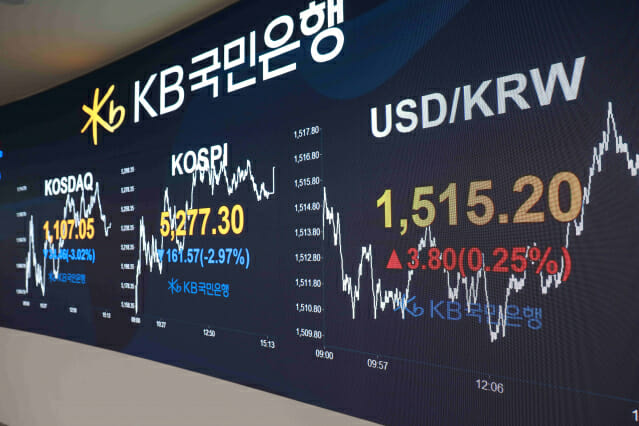
As the risk of a Middle East war between the United States and Iran intensified, the won-dollar exchange rate stayed in the 1,500 won range for three consecutive trading days.
It closed at 1,515.7 won on the 30th, a serious level that far exceeds the average annual exchange rate (1,276.3 won) during the 2009 global financial crisis.
As risk-off sentiment in the market reaches its peak, a preference for cash (dollars) over bonds or gold is becoming clear.
Three Key Factors Entrenching the High Exchange Rate
First, it is moving in tandem with international oil prices. As oil prices threaten the 100-dollar level, they are strongly fueling dollar strength.
Second, there has been a structural change in the fundamentals of the foreign exchange market. Domestic dollar demand has surged structurally due to the increase in massive overseas investment by individual investors (the so-called "Seohak Ants") and the entrenched Korea-U.S. interest rate inversion.
Third, there has been a large-scale exodus of foreign investors from the domestic stock market. As concerns over a global AI bubble spread, foreign investors made net sales of about 30 trillion won on the KOSPI in March alone, the largest monthly amount on record.
In particular, 21 trillion won flowed out of the two semiconductor heavyweights, Samsung Electronics and SK hynix, alone, leading the decline in the value of the won.
Implications for Investors
The current high exchange rate in the 1,500 won range is the result not only of geopolitical issues but also of structural dollar outflows from the Korean economy.
Since it is difficult to expect the exchange rate to fall until a clear catalyst such as the end of the Middle East war emerges, investors should maintain a certain proportion of dollar assets to guard against the risk of foreign exchange losses.
Investors also need to approach the market from a conservative perspective, keeping in mind the volatility of the semiconductor sector, from which foreign money has rapidly exited.