Analysis Report on the High Oil Price Shock and Large Companies Entering Energy Emergency Management
Market Situation Summary and Analysis
Recently, as rising military tensions in the Middle East sent international oil prices soaring, an energy emergency has hit Korean industry.
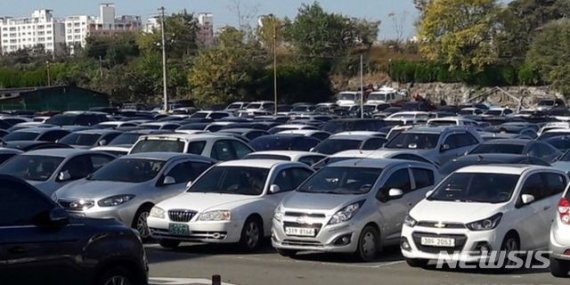
In line with the government's energy-saving policy, following Samsung, Hanwha and HD Hyundai, LG Group has introduced a 10-day vehicle rotation system across all its sites,
and Lotte and SK are implementing a 5-day vehicle rotation system, as major conglomerates shift to preemptive emergency management systems to defend against costs.
Large Companies' Moves to Save Energy and Improve Efficiency
The companies' measures go beyond simply restricting vehicle use.
LG Group has applied automatic light-off systems at major office buildings such as the Yeouido Twin Towers and built solar power facilities on the roof of the integrated production building at LG Smart Park to expand its use of renewable energy,
stepping up energy use monitoring and efficiency work across its sites.
This is a company-wide response to minimize the blow that soaring energy costs will have on earnings.
Implications from an Investor's Perspective
Investors should interpret these moves by major conglomerates not as simple in-house campaigns but as a significant signal that already prices in inflationary pressure in the real economy and the risk of rising costs.
If high oil prices persist, the profitability of traditional industries with high energy sensitivity could be damaged.
On the other hand, new order momentum may arise for energy management solution (EMS) companies that improve factories' power efficiency and for the value chain related to renewable energy infrastructure such as solar power, so
a strategic portfolio approach that prepares for market volatility is needed.