Hyundai Motor/Kia and Samsung Electronics Launch Car-to-Home: An Analysis of the Expanding SDV Ecosystem
Market summary and analysis
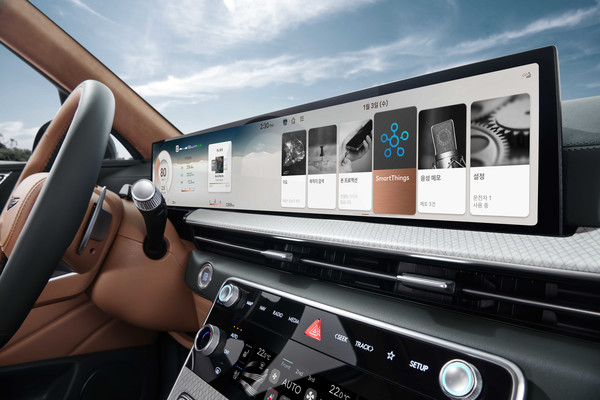
Hyundai Motor Group and Samsung Electronics have teamed up to fully launch Car-to-Home, a service that lets users remotely control home appliances from the in-vehicle infotainment system.
This is seen as more than a simple combination of different industries; it is a core platform strategy to gain the upper hand in the race for SDV (Software Defined Vehicle) leadership, the hottest topic in the global mobility market.
It suggests that cars are evolving from mere means of transportation into huge hubs that control the smart home.
Key features and technology of the Car-to-Home service
The service is implemented through real-time integration with SmartThings, Samsung Electronics' smart home platform.
The most important differentiator is the smart routine feature based on vehicle location information.
It maximizes the user experience (UX) by predicting the user's travel route, cutting unnecessary power when they go out and preemptively turning on the air conditioner and air purifier when they head home.
Linking the systems is also done easily just by scanning a QR code in the SmartThings app, greatly lowering the barrier to entry.
Future rollout plans and industry implications
The Car-to-Home service is currently being rolled out gradually via OTA (over-the-air) wireless software updates to Hyundai and Kia models equipped with the latest ccNC infotainment system.
It is scheduled to expand to the ccIC27 system in the Genesis lineup in the future.
Automakers gain a lock-in effect, increasing time spent in their vehicles and tying customers to their own software ecosystems, while appliance makers secure mobility as a new touchpoint, creating powerful synergy.
Implications for investors
Investors should pay attention to the structural shift in the auto industry from hardware sales toward software subscription and service-based models.
Hyundai Motor Group's advanced infotainment and Samsung Electronics' expanding IoT ecosystem could act as factors in a long-term valuation re-rating for both companies.
In addition, with this partnership as a catalyst, it is also worth watching the growth potential of small and mid-sized software companies in the value chain with capabilities in vehicle communication modules, security solutions and OTA technology.