In-Depth Analysis of the Largest Crash in KOSPI History: Market Outlook and Response Strategy Report
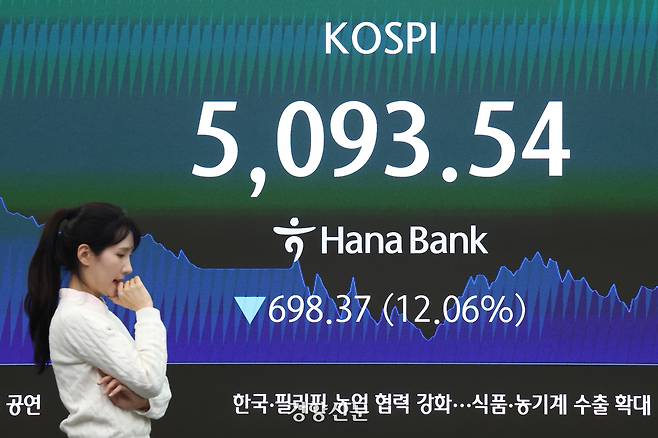
Market situation summary and analysis
Today, the Korean stock market faced an unprecedented event as the KOSPI plunged more than twelve percent, recording the largest drop in its history and surpassing the shock of the 9/11 attacks in 2001
As soon as the opening bell rang, a record-breaking sell-off worth trillions of won poured in from across market participants, foreigners, individuals and institutions alike
As a result, sell-side sidecars and circuit breakers were triggered one after another in both the KOSPI and KOSDAQ markets, creating a market of fear in which stock trading itself was completely paralyzed
Even top-tier large caps such as Samsung Electronics and SK hynix, which usually prop up the market, fell more than 10 percent, on a day when panic selling unrelated to fundamentals swallowed the entire market
Causes of the decline and conflicting market outlooks
Market experts are currently sharply divided between two conflicting views of this crash
On one side, there is the pessimistic view that, with geopolitical risks and macro uncertainty overlapping, the stock market, which had been running nonstop, has signaled a peak and entered a full-fledged bear market
On the other side, however, this sharp drop is interpreted as a very healthy and necessary correction in which accumulated short-term overheating has been resolved all at once
In fact, since this is a dumping spree caused by an external shock and weakened investor sentiment without any damage to fundamentals, the view is strongly emerging that now is a once-in-a-lifetime chance to buy blue chips, usually too expensive to approach, at bargain prices
Indeed, even amid the market's extreme fear, some global investment institutions have actually raised their target prices for Samsung Electronics and SK hynix, showing firm confidence in the semiconductor super cycle
Forecast of future market trends
In the short term, the market is likely to be a roller coaster, with aftershocks continuing and volatility maximized
This is because the index needs time to build a bottom while the forced liquidation volume, in which dumping triggers more dumping, is absorbed
Historically, however, crashes caused by external variables, while corporate earnings and economic fundamentals remain intact, have always been accompanied by steep V-shaped rebounds
In particular, as long as global companies keep investing in AI infrastructure, demand for semiconductors such as high-bandwidth memory is bound to keep growing explosively
Therefore, a strong rebound rally led by the leading stocks is expected to begin once fear in the market subsides and foreign investor flows turn back to net buying
Smart investor response strategies in a crisis
In such extreme market conditions, the wisest strategy for investors is to be thoroughly wary of herd trading, getting swept up by fear and dumping their holdings at the bottom
Now is not the time to leave the market but the golden time to focus strictly on companies' intrinsic value and prepare for the next bull market
For investors with ample cash, a very effective strategy is to take this crash as an opportunity to increase their positions in core blue chips they have been watching, through disciplined staggered buying
On the other hand, for investors who already hold stocks, cutting losses at today's bargain prices makes no sense; they need to recheck whether the company's growth story is still valid and have the patience to wait for a rebound
In the end, only investors who overcome fear and accumulate good assets at low prices will reap the greatest rewards when the market regains stability