Kevin Warsh's Nomination as Fed Chair and the 2026 Market Outlook
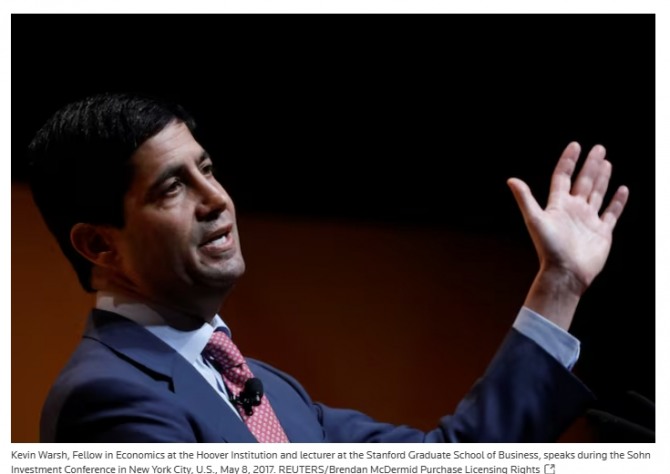
Who is Kevin Warsh?
- He is the nominee for the next Fed Chair named by President Donald Trump, and is regarded as a 'well-prepared elite' on both Wall Street and in political circles.
- Background: A former Morgan Stanley investment banker, he is well versed in real-world finance and previously served as the youngest-ever Fed governor (2006~2011). As the son-in-law of Ronald Lauder (of the Estée Lauder family), he also has deep ties to Trump.
- Interestingly, he is also an outside director of Coupang and holds about 10 billion won worth of its shares.
Core orientation: a 'Sound Money' advocate
- He holds the philosophy that "the economy grows only when the value of money is stable."
- He was critical of the Fed's unlimited money printing (quantitative easing) in the past and has shown himself to be an inflation fighter (a hawk).
- Recent shift: Just before his nomination, he took a flexible stance in line with Trump's position, saying "interest rates are too high right now," but the market interprets this as a political gesture and sees him as essentially closer to a 'hawk.'
Market reaction analysis: Why did asset prices plunge?
President Trump chose him to 'cut interest rates,' but asset markets such as gold, silver and Bitcoin took it as bad news and fell sharply. The reasons are as follows.
- ① The return of the 'strong dollar'
Gold and Bitcoin are assets that rise when the value of the dollar falls. But Warsh is someone who will pursue policy "without undermining the value of the dollar." The prevailing outlook is that the dollar will strengthen if he becomes chair, so the appeal of alternative assets such as precious metals and coins has declined.
- ② Fears that the liquidity party is over
The market wanted a 'yes-man' who would pump out money more boldly than Chair Powell. But while Warsh favors deregulation, he is allergic to printing money recklessly. The fear that "the free lunch (unlimited liquidity) is over" dampened speculative sentiment.
- ③ Resolution of uncertainty and profit-taking
Assets that had risen as a hedge against 'Fed instability' after the launch of Trump's second term poured onto the market as sell orders, amid relief, once Warsh, a 'rational and strong figure,' appeared.
Future market scenarios
A Fed led by Warsh is expected to prioritize “the flow of money (regulation) over the quantity of money (interest rates).”
| Category | Outlook and key points |
|---|---|
| Base rate | "Cut slowly and cautiously"
He will cut rates as Trump demands, but will control the pace so as not to stoke inflation. It is best to lower expectations of rapid cuts. |
| Stock market | "Rise of deregulation beneficiaries"
Since he strongly supports financial deregulation, it is very good news for financial stocks such as banks and securities firms. An environment that encourages corporate investment will be created, and gains are expected to center on blue chips backed by solid earnings. |
| Virtual assets | "Accelerated institutionalization"
In the short term, they will take a hit from concerns about 'shrinking liquidity,' but in the long term, he is likely to recognize Bitcoin as an institutional asset and put related regulations in order. Their character may change from speculative surges to that of assets with a gentle upward trend. |
| Exchange rate | "Dollar strength maintained"
Given Warsh's tendency to emphasize the fundamentals of the U.S. economy, the dollar is likely to remain strong for the time being. This could weigh on emerging markets. |
Overall summary and advice for investors
The combination of Trump and Kevin Warsh will be a balancing act between "rate cuts for growth (Trump) vs. monetary policy that protects value (Warsh)".
- Conclusion: For the time being, the market will enter a phase of separating the wheat from the chaff rather than 'unconditional gains.'
- Strategy: Rather than thematic assets that rose only on the strength of liquidity, it seems advantageous to focus on financial/industrial sectors that directly benefit from deregulation, or quality assets that become attractively priced during corrections.