Trump's Push to Buy Greenland and U.S.-EU Trade Tensions
In January 2026, the Trump administration once again formalized its intention to purchase Greenland, a self-governing territory of Denmark, and is threatening to impose high tariffs on Denmark and the European Union (EU), which rejected the idea.
In response, the EU has signaled immediate and resolute retaliatory tariffs, heightening the risk of a trade war within the transatlantic alliance.
The Key Reasons Trump Wants Greenland
The reason President Trump is fixated on Greenland, even at the cost of diplomatic friction, is not a simple real estate investment but is rooted firmly in U.S. national interests and security strategy.
- First, securing rare earths and resources.
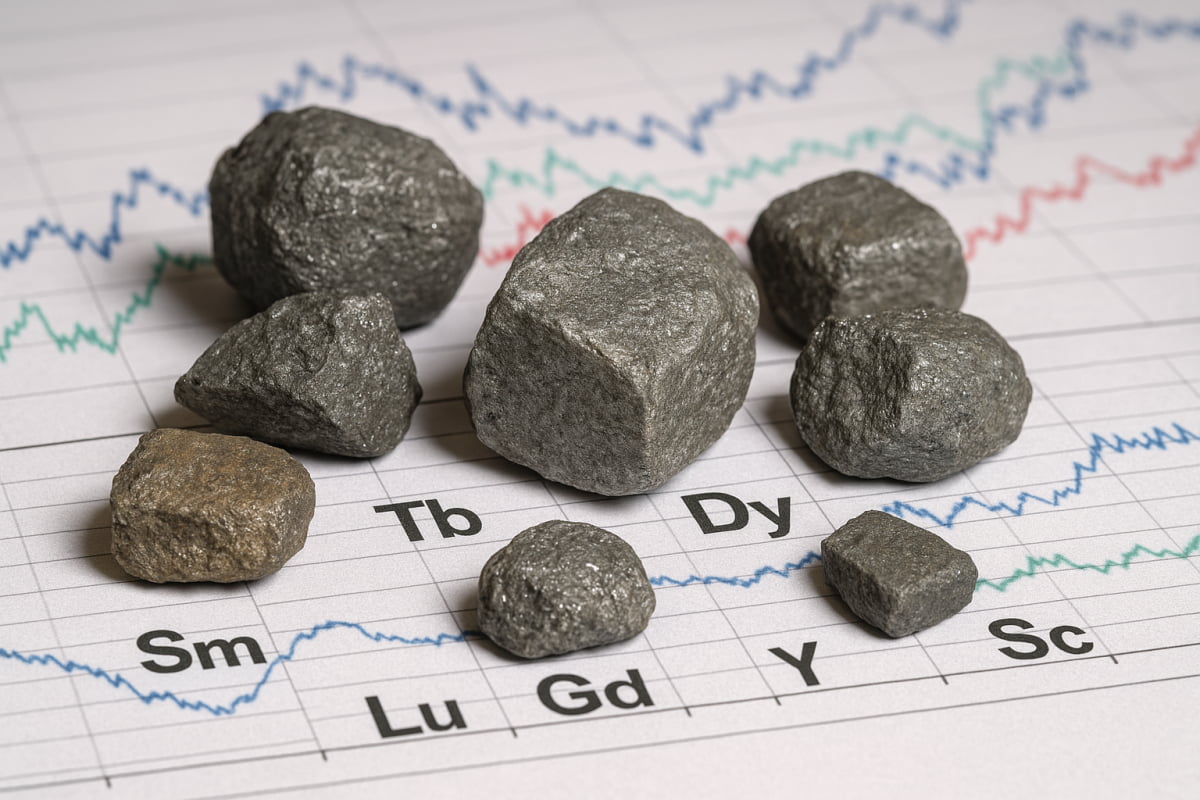
Greenland holds deposits of rare earths essential for manufacturing electric vehicle batteries, semiconductors and cutting-edge weapons.
With China currently dominating the global rare earth supply chain, the U.S. seeks to reduce its dependence on China and establish resource security through Greenland.
- Second, a geopolitical strategic point in the Arctic.
As global warming opens up Arctic shipping routes, the strategic value of this region has soared.
As Russia and China expand their influence in the Arctic, the U.S. wants to seize military and economic leadership in the Arctic Ocean by taking full control of Greenland.
- Third, strengthening military security strategy.
The U.S. military's Thule Air Base already exists in Greenland. It is a key base for early detection of missiles aimed at the U.S. mainland.
The U.S. wants to make this region its territory so it can freely expand military bases and solidify its defense network.
Market Outlook
In the short term, volatility in financial markets is expected to increase.
- First, a weaker euro and a stronger dollar.
If a tariff war between the U.S. and the EU materializes, concerns that the export-driven European economy will take a bigger hit will push down the value of the euro and strengthen the preference for the dollar as a safe asset.
- Second, renewed inflationary pressure.
Retaliatory tariffs from both sides will lead to higher import prices and could reignite global inflation, which had been stabilizing.
This could delay the timing of interest rate cuts and put downward pressure on the stock market.
- Third, accelerated supply chain restructuring.
To reduce dependence on Europe and China, the shift of supply chains to production within the U.S. or to U.S. allies will speed up further.
Companies and Sectors Worth Watching
Trump's push to buy Greenland and the resulting U.S.-EU trade tensions bring three key themes to the fore in the market: 'resource security', 'Arctic defense' and 'supply chain self-reliance'.
Not only existing large caps but also small- and mid-cap stocks (Small-Mid Cap) closely linked to these themes may show high elasticity.
Large Caps (Stable Portfolio)
- Lockheed Martin (LMT)
Rising military tensions in the Arctic inevitably lead to strengthened surveillance and missile defense systems. As the world's largest defense company, it is expected to see more orders as the U.S. government develops its Arctic strategy.
- MP Materials (MP)
The leading stock of the 'rare earths' theme at the heart of the Greenland issue. It owns the only rare earth production facility in the U.S., so it benefits most directly amid U.S.-China tensions and the weaponization of resources.
- ExxonMobil (XOM)
With the possibility of Arctic resource development and greater oil price volatility due to geopolitical instability, it becomes the most stable defensive stock and source of returns within the energy sector.
Small and Mid Caps
- Energy Fuels (UUUU)
A leading U.S. uranium producer that is expanding its rare earth processing business. As a company at the intersection of the Trump administration's emphasis on 'energy independence' and 'securing critical mineral supply chains', high share price volatility can be expected if the resource war intensifies.
- Kratos Defense (KTOS)
Specializes in low-cost, high-efficiency drones and satellite communication systems. To efficiently monitor the vast Arctic region, demand for drones rather than manned aircraft is bound to surge, and improved earnings are expected as a result.
- Materion (MTRN)
Supplies advanced materials such as beryllium that are essential for aerospace and defense. Like rare earths, it is a 'hidden champion' company that draws attention when the strategic value of specialty metals rises.
- Fluor (FLR)
A global engineering and construction company. If Greenland is actually developed, or if U.S. military bases and resource mining infrastructure need to be built in the Arctic, companies with construction know-how in extreme environments are likely to win orders.
- Cleveland-Cliffs (CLF)
One of the largest steel producers in the U.S. If Trump starts a tariff war with Europe, steel tariffs are likely to be revived, which tends to lead to higher steel prices in the U.S. and higher profits for domestic steel companies.
High Risk, High Return (Jackpot OR Bust)
- Critical Metals (CRML) An 'explorer' holding a treasure map and just setting out to dig into the mountain - a company that holds a stake in and leads the development of the Tanbreez rare earth mine project in Greenland.
A stock that will move more strongly, up or down, than any of the stocks mentioned above,
a company whose survival depends on whether its Greenland mine development succeeds; the Tanbreez mine is called the world's largest rare earth deposit, but
even if things go well, development and plant construction require astronomical amounts of money and time, it has no current revenue, and it may need to attract investment or carry out a rights offering,
and because Greenland lacks infrastructure, development may take longer than expected, and political issues must also be considered.
Trump's attempt to buy Greenland is not a mere happening but a long-term U.S. strategy to seize hegemony over resources and security.
Investors should prepare for short-term market corrections stemming from the U.S.-EU trade dispute, while continuing to pay attention to companies related to resource security and the defense industry.