Is the Korean Economy Really Collapsing? Living with a 1,475-Won Exchange Rate: Structural Changes in the Korean Economy and Investment Strategies
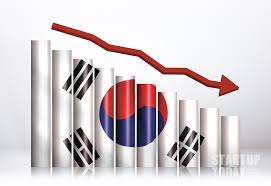
1. A 'temporary crisis' or a 'structural new normal'?
In Korea's economic history, the won/dollar exchange rate exceeded 1,400 won only twice: during the 1997 IMF foreign exchange crisis and the 2008 global financial crisis.
Back then, there was a clear reason: the collapse of the national system or a worldwide credit crunch.
But today, in 2026, Korea appears calm on the surface. There is no national default crisis and no collapse of the global financial system.
Even so, the exchange rate stands at 1,475 won.
An era of ultra-high exchange rates that arrived without any crisis talk is a strong signal of structural change, suggesting that the fundamentals of the Korean economy have changed at their core.
2. Three key triggers keeping the exchange rate from falling
Many investors believe the old formula: "When exports do well, dollars come in and the exchange rate falls."
But that formula is now broken. Why does the value of the Korean won keep falling?
① The paradox of the trade surplus
This is the easiest part to misunderstand. Korea's trade indicators currently look excellent on the surface.
- As of 2025, annual exports surpassed 700 billion dollars, and the trade balance (exports minus imports) also posted a record surplus. In other words, the 'net profit' that the company called Korea earned from doing business is ample.
- In the past, these huge dollar inflows would have raised the value of the won. But now, money is 'going out' faster than it is 'coming in.'
- Companies do not bring the dollars they earn back home and convert them into won. Instead, they use them to expand overseas factories in places like Texas and Georgia in the U.S. and for equity investments. It is a structure in which dollars are reinvested directly overseas instead of being released into the domestic foreign exchange market.
② A huge hole in the 'capital account': Seohak ants and the exodus from the Korean market
Capital movements by domestic (individual) investors are breaking down the exchange rate's line of defense.
- The influence of Seohak ants: As growth in the domestic stock market stalled, individual investors sold won, bought dollars and moved en masse into U.S. stocks (NVIDIA, Tesla, etc.).
- Structural outflow: The dollars hard-earned through trade (the current account surplus) are flowing straight out through individuals' investments in U.S. stocks. This acts as the strongest resistance line preventing the exchange rate from falling.
③ The entrenched Korea–U.S. interest rate inversion
The basic interest rate gap also remains a burden.
While the U.S. flexibly maintains a high-rate stance to control inflation, Korea has not been able to raise rates as much as the U.S. because of the household debt time bomb and concerns about a slump in domestic demand.
Capital flows to where returns are higher. The preference for dollar assets that pay higher interest is the basic backdrop for the weak won.
3. The 'valuation trap' faced by foreign investors
This high exchange rate environment is making Korea an 'unattractive market' for foreign investors. The case of Samsung Electronics shows this starkly.
- Share price return: Samsung Electronics' share price has risen more than 40% from its COVID low. (In profit territory for domestic investors)
- Currency loss: Over the same period, the value of the won fell by about 34%.
- Foreigners' real return: The currency loss offsets most of the share price gain, so the return in dollar terms is only about 6%.
Insight: From a foreigner's point of view, the Korean market is "no matter how hard you push the share price up, because of the exchange rate, it is "a bottomless jar where returns melt away". This is the decisive barrier blocking foreign capital from actively pursuing 'Buy Korea.'
4. Outlook: two scenarios
The future direction of the Korean economy and asset markets ultimately depends on 'whether the exchange rate stabilizes.'
Scenario A: Positive stabilization (30% probability)
- Conditions: Continued expansion of the semiconductor supercycle + aggressive rate cuts by the U.S. Federal Reserve (Fed) + domestic capital returning thanks to the success of the government's Value-up Program.
- Outlook: Inflows of export proceeds into Korea increase, and the exchange rate stabilizes in the low 1,300-won range. Foreigners will then aggressively buy large-cap stocks, aiming for 'share price gains + currency gains.' This would be a true re-rating phase for the KOSPI.
Scenario B: A new normal of high exchange rates (70% probability)
- Conditions: The trade surplus is maintained, but outflows for overseas investment continue + the Korea–U.S. interest rate gap persists.
- Outlook: An exchange rate of 1,400–1,500 won becomes our 'everyday reality.' Fearing currency losses, foreigners will focus on short-term trading rather than long-term investment, and the domestic stock market is likely to be stuck in a range. Individuals' 'asset emigration' (preference for U.S. stocks) will accelerate.
5. A guide for investors
Strategies for surviving in a changed economic structure are as follows.
- The exchange rate is not just an indicator but a 'variable that determines returns' When you wake up in the morning, check the won/dollar exchange rate before checking Samsung Electronics' share price. Unless the exchange rate turns down, genuine foreign buying will not come in.
- Currency diversification: Keeping 100% of your assets only in won assets (Korean real estate, Korean deposits) is risky. To preserve the purchasing power of your assets, you must include dollar assets, U.S. stocks, gold and the like in your portfolio.
- Gauge the 'quality' of foreign flows: Don't get excited just because foreigners are net buyers for a few days. Unless the buying comes in as the exchange rate turns to a downtrend, it is just short-term money that can leave at any time.