Latin American Geopolitical Risk and the Commodities Market: Study Report and Companies to Watch
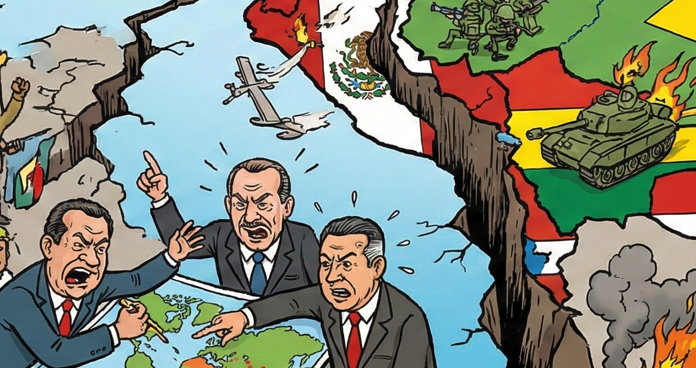
Latin America is a key supplier of the world's mineral and energy resources.
Political instability in resource-rich countries such as Venezuela, Chile, Peru and Brazil goes beyond mere regional news and causes bottlenecks in global commodity supply chains.
This in turn acts as a trigger that sends asset prices soaring, making it both a crisis and an opportunity for investors.
When does geopolitical risk arise?
- Political instability within Latin American countries (sanctions on authoritarian regimes, mining union strikes, declarations of resource nationalization, etc.)
- Developments: production facility shutdowns, transport road blockades, economic sanctions by Western countries
- Spreading fears of global supply shortages -> sharp rise in prices of the commodities concerned
Market movements by key asset
[Oil]
Related countries: Venezuela, Brazil
Market reaction: When political turmoil in Venezuela or U.S. sanctions intensify, fears that global crude oil supply will decline are stoked and international oil prices rise. This is positive for the energy sector as a whole, but companies highly dependent on Venezuela face greater individual risk.
[Copper]
Related countries: Chile, Peru (about 40% of global production)
Market reaction: News of protests blockading mine roads in Peru or mining union strikes in Chile leads to an immediate rise in copper prices. In particular, copper is essential for AI data centers and power grids, so its price sensitivity is very high.
[Lithium]
Related countries: Chile, Argentina, Bolivia (the Lithium Triangle)
Market reaction: When a government champions resource nationalism by declaring that lithium will be managed under state leadership, price volatility is maximized due to concerns about shrinking private-sector investment.
Analysis of key related companies
These are 7 representative companies that hold key assets in Latin America, so their stock prices and earnings react sensitively to changes in the region's political situation.
(1) Chevron (Chevron, ticker: CVX)
Key resources: oil, natural gas
Features: It is the only major U.S. oil company holding a special license from the U.S. government authorizing crude oil production and exports in Venezuela.
What to watch: If relations between Venezuela's Maduro regime and the U.S. improve and sanctions are eased, it could benefit the most by tapping Venezuela's vast reserves. It has the character of a defensive stock that generates stable profits when oil prices rise.
(2) Freeport-McMoRan (Freeport-McMoRan, ticker: FCX)
Key resources: copper, gold
Features: As the world's largest listed copper company, it is highly dependent on mines in Peru and Chile. Local strikes can be bad news in the short term, but it is the company whose profits increase the most when copper prices rise.
What to watch: With copper demand structurally increasing due to the expansion of AI and power infrastructure, supply shocks from Latin America become a factor that raises corporate value in the long run.
(3) Southern Copper (Southern Copper, ticker: SCCO)
Key resources: copper, silver
Features: It holds the largest copper reserves of any listed company in the world, with production facilities concentrated in Mexico and Peru.
What to watch: There are major concerns about production disruptions when Peru's political situation is unstable, but it is popular with long-term investors thanks to its high dividend payout ratio. Its stock price rises resiliently during periods of rising copper prices.
(4) Albemarle (Albemarle, ticker: ALB)
Key resources: lithium
Features: It is the world's No. 1 lithium producer, and Chile's Atacama salt flat is its key production site.
What to watch: Its stock price reacts most sensitively to news about the Chilean government's nationalization policy. It is the leading stock that recovers fastest when political uncertainty is resolved or the EV market rebounds.
(5) Vale (Vale S.A., ticker: VALE)
Key resources: iron ore, nickel
Features: It is Brazil's largest company by market capitalization. It reacts immediately to news of mining tax hikes or stricter environmental regulations by the Lula government.
What to watch: If the value of the real plunges due to political instability in Brazil, it can also enjoy a currency effect in which it gains export competitiveness and its earnings improve.
(6) SQM (Sociedad Química y Minera de Chile, ticker: SQM)
Key resources: lithium
Features: As a local Chilean company, it is the most vulnerable to the government's nationalization policy.
What to watch: Its political risk is very high, but its dividend yield is correspondingly high. It draws attention from investors willing to take on risk in pursuit of high dividends.
(7) Pan American Silver (Pan American Silver, ticker: PAAS)
Key resources: silver, gold
Features: Its mines are spread across Latin America, including Mexico, Peru and Bolivia.
What to watch: In geopolitical crises, silver prices rise due to a preference for safe-haven assets, and because silver makes up a high share of its production, its stock price has very strong upward momentum in precious metals bull markets.
Summary of key points
When news of geopolitical risk from Latin America is reported, investors should interpret it not as mere political turmoil but as a signal of a supply shock.
- First, you need to understand the dual nature of market reactions. Political instability stirs up fears of supply chain disruptions and pushes up commodity prices. But at the same time, it increases the risk of production stoppages for companies operating locally.
- Second, you need to look at companies' profit structures. The stock prices of related companies tend to fall in the early stages of a risk event due to concerns about production disruptions. But eventually, the rise in commodity prices leads to higher corporate profits, and stock prices tend to trend upward.
- Third, the response strategy. If the stock prices of quality mining companies temporarily fall excessively due to news of protests in Chile or Peru, this can be a buy-the-dip opportunity to enter based on confidence in structural growth (AI, power grids, EVs). However, companies directly hit by government policy, like SQM, require a cautious approach.